The Sacred Art of Hilandar Bookbindings
In the Orthodox tradition, the book is revered as a sacred object, and its binding as the guardian and adornment of the Word.
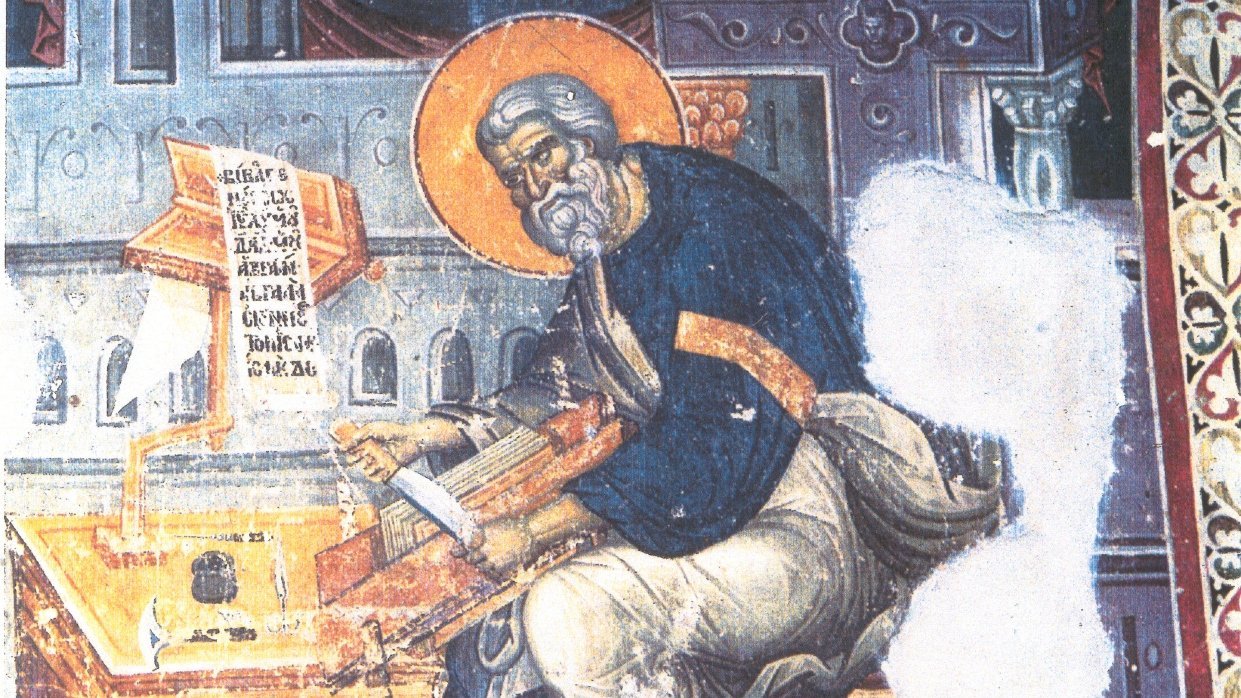
While the scroll continued to be used for most Greco-Roman and Jewish works, early Christians adopted the codex very quickly as the primary form of the book.
A book is one of the most remarkable objects created by humankind. Although material, it is also a link with the spiritual world. The distinct nature of the book and its unique form allow for artistic and craft expression that can attain the highest degree of refinement. Old masters recognised this, approaching work on a book as an artistic — and even sacred — act.
In the Orthodox tradition, the book has been revered as a sacred object: a reflection of revelation and a bearer of grace. Work on a book was therefore understood as a mystical and grace-filled collaboration between man and God. The sanctity of church books was also affirmed through consecration: “These ecclesiastical and liturgical books are blessed and sanctified by the sprinkling of this holy water, in the name of the Father, the Son, and the Holy Spirit. Amen.” It was therefore natural that their outward appearance should express not only the content a book carries, but also the invisible grace to which it bears witness.
The material appearance of a book — its binding — has a practical and aesthetic dimension, but it also carries a deeper meaning. It leads us into an archetypal world of symbols in which the form of the book expresses humanity’s longing for God’s revelation through the Word, which, according to Orthodox theology, is eternal, as the Evangelist John testifies: “In the beginning was the Word.” Writing and reading are, in their essence, a striving toward that revelation, while the binding, as the guardian and adornment of the Word, gives this longing and search a visible form and dignity.
The teaching and holy tradition of the Church are transmitted through Word, Sound, and Image. The archetype of the Word is Holy Scripture; the archetype of Sound is church chant in the eight modes, which Orthodox tradition associates with Saint John of Damascus; and the archetype of the Image is, above all, the Image Not Made by Hands. Their full unity is realised beneath the dome of a church, an icon of the Heavenly Jerusalem. In this sense, a bookbinding too — through its structural and decorative elements — participates in the same sacred and symbolic order.
The complete text, “The Sacred Art of Hilandar Bookbindings,” is available in the print edition of the Serbian weekly magazine Kompas, on newsstands from Thursday, 23 July.